The set is a decision
A ground is a set, not a colour: a sweep of paper with a floor, a wall and a light on it. Why the house ships a curated shortlist of grounds instead of a colour picker, and how to choose between them against your range rather than your taste.
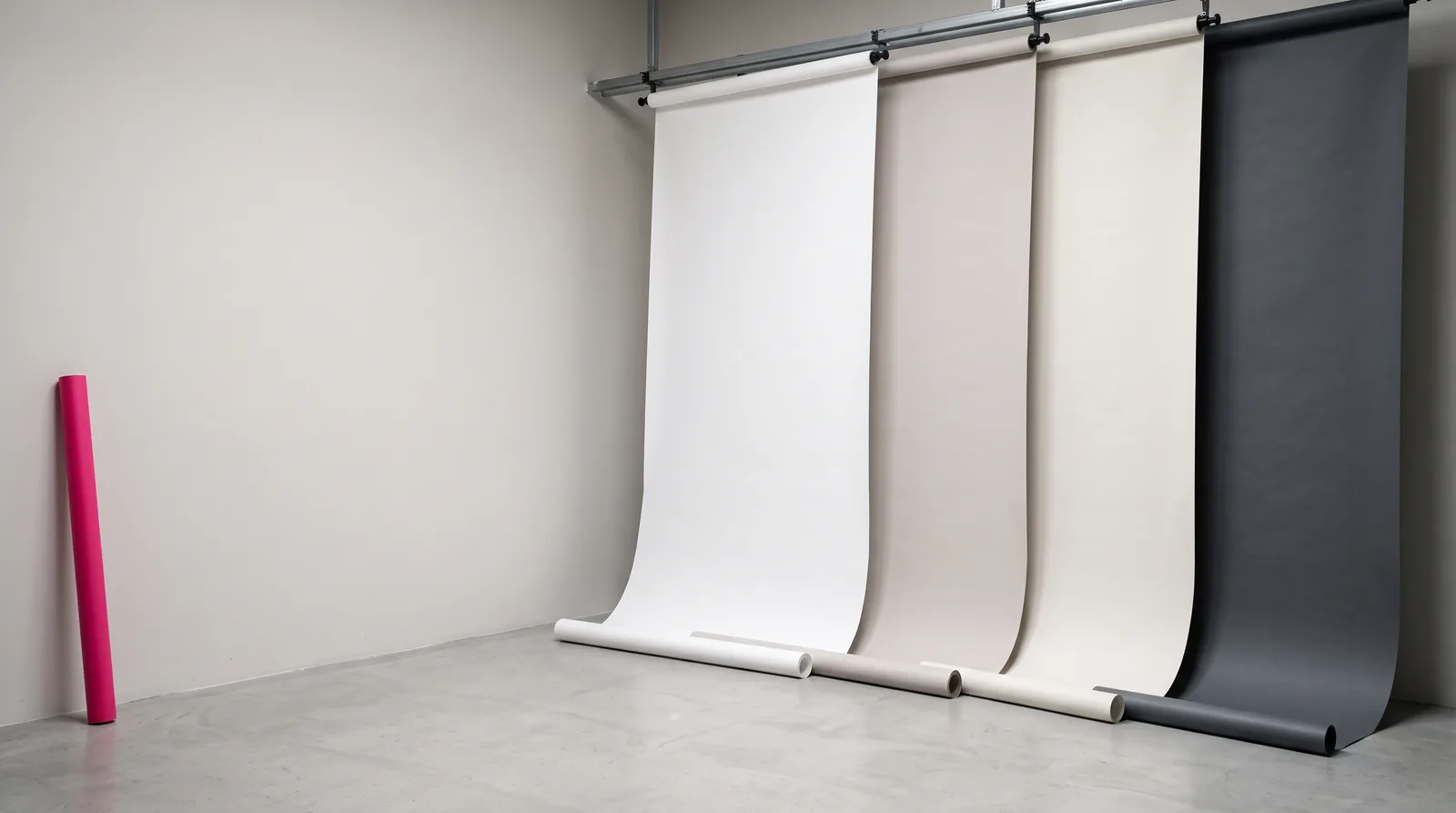
A ground is a set, not a colour: a sweep of paper with a floor, a wall and a light on it. That is why the house ships a curated shortlist rather than a colour picker, and why choosing one is worth doing deliberately instead of taking whatever comes up first. The colour is the least important thing about a background.
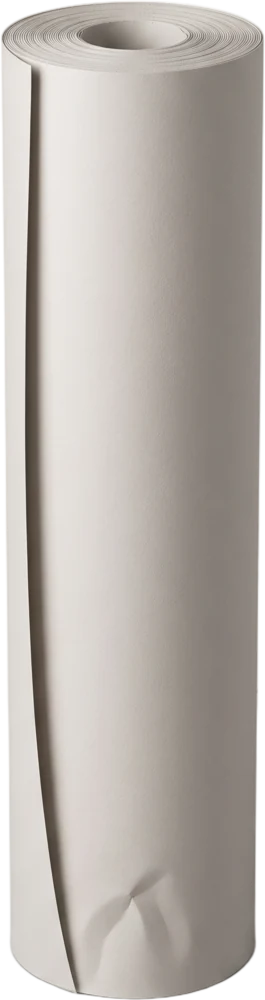
Ask a photographer what background they want and they will name a paper. Ask most software and you get a hex value.
What a sweep actually is
A sweep is one length of seamless paper that curves off the wall and runs out onto the floor. There is no line where the two meet, because there is no join. The paper simply bends. That curve is doing something specific: it puts a soft gradient behind the subject, it gives the feet somewhere to stand, and it removes the horizontal edge that would otherwise tell your eye exactly how far away the wall is.
Take the curve away and you have a flat field of colour. A garment on a flat field floats. It has no ground to sit on, so the contact shadow has nothing to fall onto, so either you remove the shadow and get a sticker or you keep it and it reads as painted on. That is the most common tell in a background that was composited rather than shot, and it is visible at thumbnail size.
Every ground in the house is a set with a real sweep. It is also why they are a shortlist. Each one has been tuned against actual garments in actual colours, and that tuning does not generalise to whatever hex a picker returns.
Choosing between them
| Ground | Use it for | Watch out for |
|---|---|---|
| Near-white | Product pages, anything that sits on a white site | White and ivory pieces losing their edge |
| Warm grey | Pale ranges that need separation | Reading cold if the light is neutral |
| Bone | Warmth without going grey | Fighting a genuinely cool collection |
| Slate | Outerwear, denim, strong silhouettes | Eating detail in charcoal and black pieces |
| Concrete | Editorial register, a floor with texture | Competing with a busy print |
Choose against your range, not against your taste. A collection that is mostly bone, ivory and oat will disappear on a near-white sweep, and you will spend the whole retouch pass rescuing edges that were never supposed to be at risk. That range wants warm grey. A charcoal-and-black outerwear drop on slate loses its own seams the same way, in the other direction.
Then choose once and hold it. A ground that changes halfway through a range is worse than any individual ground being wrong. Same law as the locked frame: the variables you did not choose to vary are the ones that break a set.
When the set should be a place
Sometimes the answer is not a sweep at all. A resort collection on a bone sweep is technically correct and completely inert. Scenes exist for that: an actual room, an actual street, an actual wall with weather on it.
A scene gives the collection a world and costs you consistency, because a place carries variation that a sweep does not. Go that way and be stricter about everything else. One scene per lookbook, one time of day, one direction of light, or the set drifts for reasons that have nothing to do with the garments.
For most e-commerce work the sweep is the right answer, and the scene is what the campaign frames are for.
Light is half of the ground
A ground is a surface with a light on it, and the same bone paper is three different backgrounds depending on where the key sits. High and frontal is the clean commercial register. Raked from the side gives the paper texture and makes the frame read as a photograph rather than a plate. Bounced flattens everything, which is the safe answer for a range that has to be consistent above all else.
The house pairs a light register with each ground for that reason, rather than letting you put a soft frontal key on a slate sweep and then wonder where the silhouette went. You can override it, in the grounds docs.
The library and what shipped with it are in what the house has shipped. Once the ground is chosen the next decision is the lock, and if you are here for catalogue work rather than campaign work, on the rail is the one to read next.
No photographer has ever been asked for #F2F0EB.
Questions
- What is a ground in FLAM?
- A ground is the set a frame is developed on: a real photographic environment with a sweep, a floor-to-wall relationship and a light, not a flat colour placed behind a cut-out. The house ships a curated shortlist, studio sweeps in white, warm grey, bone and slate, plus concrete, plus scenes for when a collection wants a place rather than a plane.
- Why a shortlist instead of a colour picker?
- Because the colour is the least important part of a background and a picker implies otherwise. What makes a set work is the sweep's curve, where the light falls across it and how the garment separates from it. Eleven grounds that have each been tuned against real garments beat infinite grounds that have not.
- Which ground should I use for e-commerce?
- Near-white for anything that will sit on a white product page, so the frame does not fight the page around it. Warm grey when the range is mostly white and ivory garments that would otherwise disappear. Bone when you want warmth without the frame reading as grey. Slate for outerwear, denim and anything where the silhouette should come forward.
- What is a sweep and why does it matter?
- A sweep is a single length of paper that curves from the wall down onto the floor, so there is no visible line where they meet. That invisible line is what makes a garment sit in a space instead of floating on a colour, and its absence is the most common tell in a background that was pasted in rather than shot.