On the rail
A catalogue holds together when four hundred garments are photographed as if they were one garment photographed four hundred times. The decisions that make a packshot are few and none is difficult, and volume is what makes every inconsistency visible.
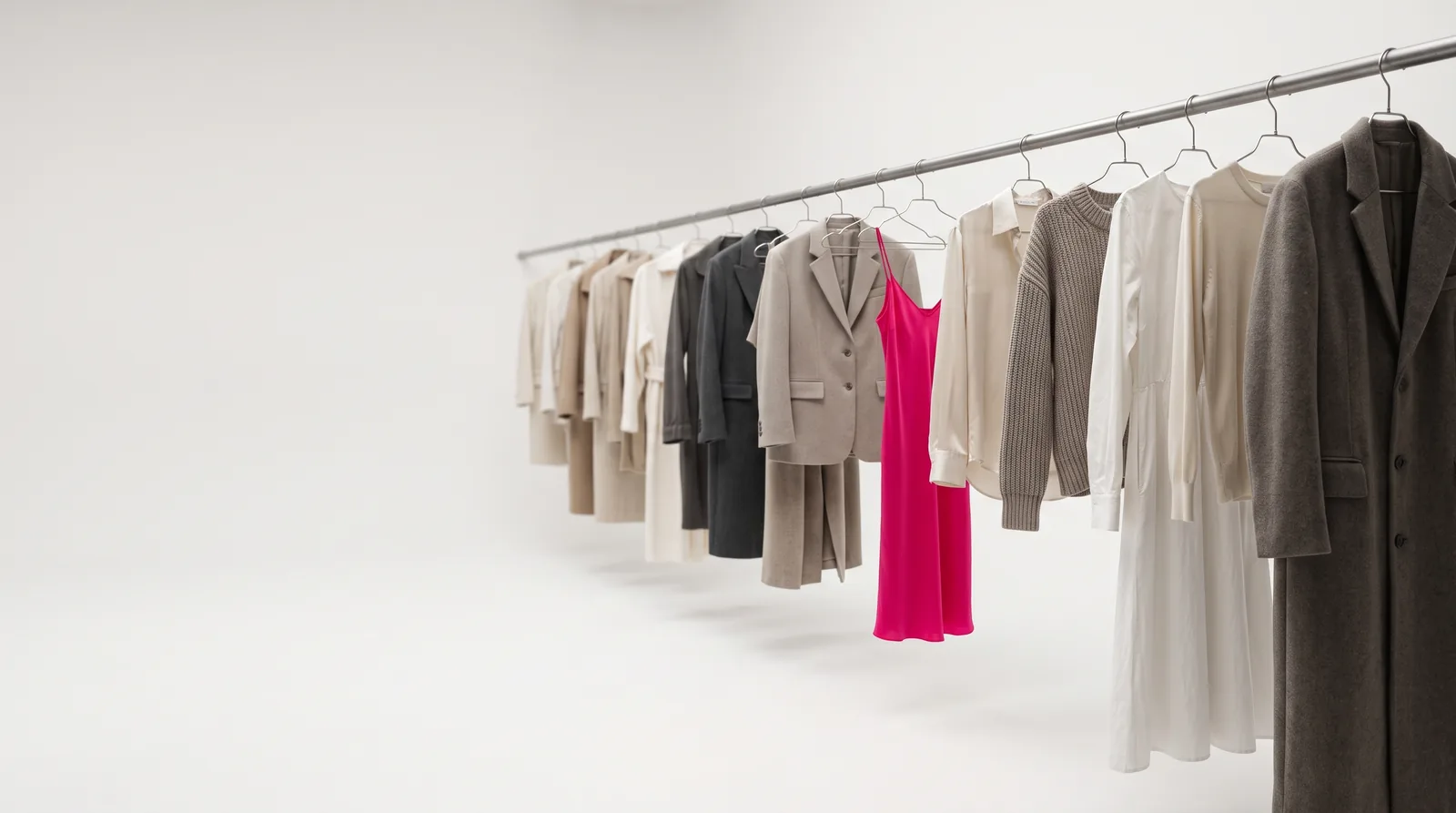
A catalogue holds together when four hundred garments are photographed as if they were one garment photographed four hundred times. The decisions behind a packshot are few and none of them is difficult. What is difficult is making the same ones on a Thursday that you made on a Monday, because volume does not lower the standard. It only makes inconsistency four hundred times more visible.
The rail is the honest picture of what volume looks like. Not a dashboard and not a number. A line of garments, each one still owed the attention the first one got, running further than you can see from where you are standing.
The decisions that make a packshot
There are only a few, and they are the same ones you would settle in a physical studio.
| Decision | What it settles | Where it goes wrong |
|---|---|---|
| Presentation | Hanger, flat lay, or ghost mannequin | Mixing two within one category |
| Steaming | Whether creases are pressed out | Steaming a knit until it looks synthetic |
| Contact shadow | Whether the piece sits on the ground or floats | Turning it off and getting a sticker |
| Ground | The sweep the piece sits on | Changing it halfway through a range |
| Angles | Which views a piece needs | Shooting a back view for a piece nobody turns over |
All of them are the sort of thing that gets decided differently on a Thursday than it was on a Monday, and that is where a range falls apart.
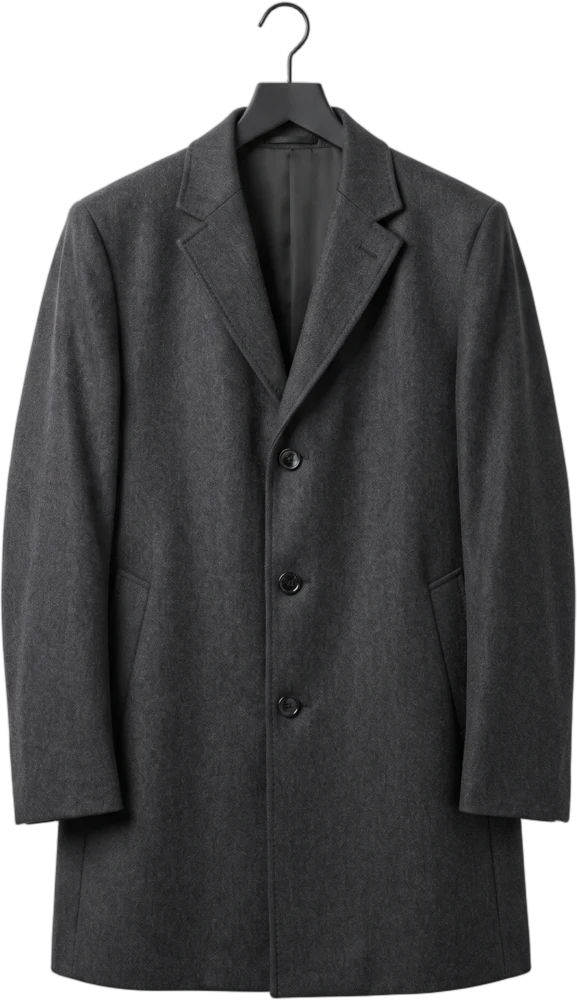
Presentation is the loudest of them. A hanger keeps the shoulder line, which is why outerwear lives there. A flat lay is honest about knitwear and shirting and reads cleanly at thumbnail size, which is where most of a range is actually seen. A ghost mannequin, the garment holding a worn volume with nobody inside it and the inner collar visible through the neck, is right for structured pieces, because the shape is the product. One presentation per category, held across the whole range, matters more than which one you choose.
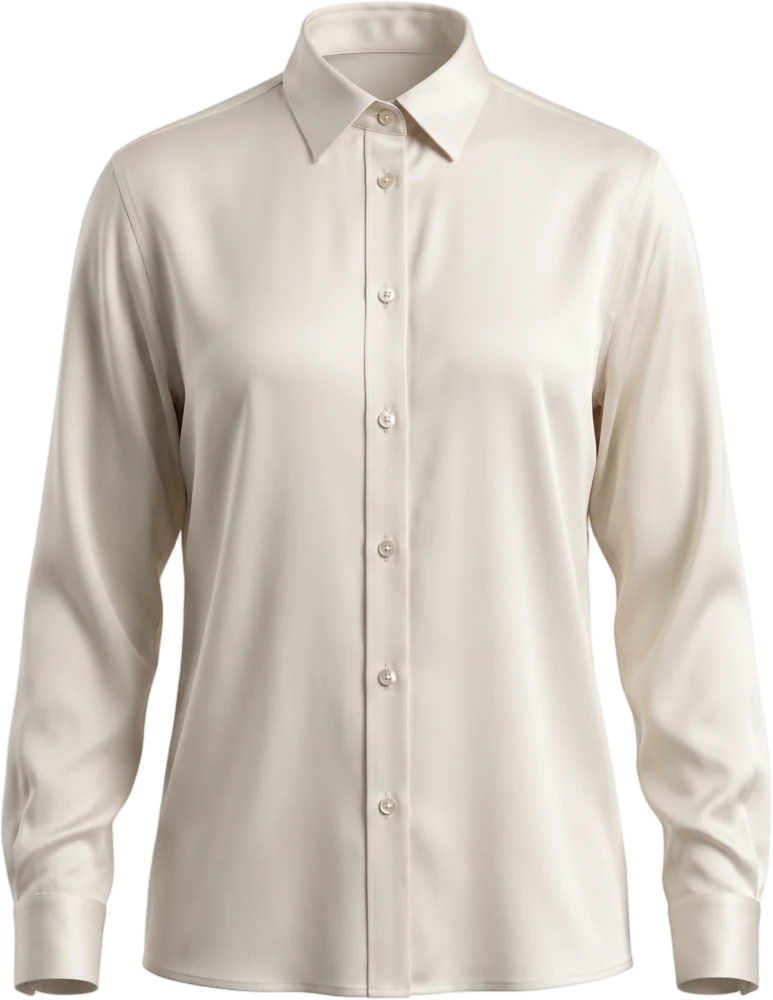
Steaming is a judgement per piece rather than a setting. Shirting and tailoring get pressed, because on a white ground a crease reads as damage. A washed linen or a heavy rib does not, because pressing them out makes the cloth look like a cheaper cloth. The house asks per piece for that reason.
The contact shadow is the one people turn off, and it decides whether the frame reads as a photograph at all. A garment with nothing beneath it does not sit on the ground. It hovers, like a sticker pasted onto white. A soft, short, natural contact shadow, no long cast and nothing dramatic, is most of what separates a photograph from a cut-out. It costs nothing, and it is the first thing I check on somebody else's catalogue.
Merging is how a piece stays a piece
At volume, most of the job is bookkeeping. A shirt photographed front and back is one product with two views, not two files. If the system does not know that, you will spend an afternoon later working out which back belongs to which front, and somebody will publish a listing with a mismatched pair.
So the house merges. Several frames become one piece with several views, matched on SKU where you have one. It also recognises what has already been packshotted and leaves it alone, which matters more than it sounds when a delivery lands half shot. What arrives in a box is the shape of that problem.
Where volume actually helps
Consistency is the one thing a machine does better than a person, and a packshot range is almost entirely a consistency problem. Somebody shooting the four hundredth garment of the week is a worse photographer than they were on the first. It is 7pm, the steamer has been on since ten, and no amount of professionalism fixes that. The house's four hundredth frame is the same as its first, because the ground, the light, the shadow and the presentation are the same declared decisions in both.
The case for developing packshots rather than shooting them is not really the cost, and not really the day it saves, though both are real. It is that the range holds.
What still needs your eye
The first frame of each category. Approve it the way you would approve a reference, because everything after it inherits it, exactly as in the locked frame.
Anything that is nearly a colour. Bone, ivory, oat and chalk are four different things to a buyer and one thing to almost every automatic pipeline. Check them against the physical sample under a light you trust, not against whichever screen you happen to be sitting at.
The pieces that are the wrong shape for the rule. A cape does not hang like a coat. A bias-cut slip does not lie like a shirt. A pleated skirt photographed flat is a lie about the skirt. Every range has half a dozen of these and they are worth doing by hand.
The step by step is in the packshots docs, the merge and the angle sets are in what the house has shipped, and the case for a shortlist of grounds rather than a colour picker is the set is a decision.
Nobody buys a range because it was consistent. They only notice when it was not.
Questions
- What is a packshot?
- A packshot is a clean, isolated photograph of a single garment made for a catalogue or a product page: on a hanger, laid flat, or held in a worn shape with nobody inside it. Its job is to describe the piece accurately and identically to every other piece in the range, not to sell a mood.
- Hanger, flat lay or ghost mannequin, which should I use?
- Hanger for outerwear and anything whose shoulder line matters. Flat lay for knitwear, shirting and anything that lies honestly. Ghost mannequin when the garment's worn volume is the selling point, which covers most tailoring and most structured pieces. Picking one per category and never mixing within a category matters more than which one you pick.
- Should packshots be steamed?
- Almost always yes for shirting, tailoring and anything woven, because on a white background a crease reads as damage. Leave knitwear and washed linen unsteamed, because pressing them out makes the cloth look like something it is not. The house makes this a per-piece choice rather than a global setting for that reason.
- How does FLAM handle multiple angles of the same garment?
- You merge them. Front, back and detail frames of one shirt become one piece with several views rather than three unrelated files, which is what lets the house recognise it later, name it consistently and use the right view in a lookbook.